
More Conversions with Less Google Ads Spend
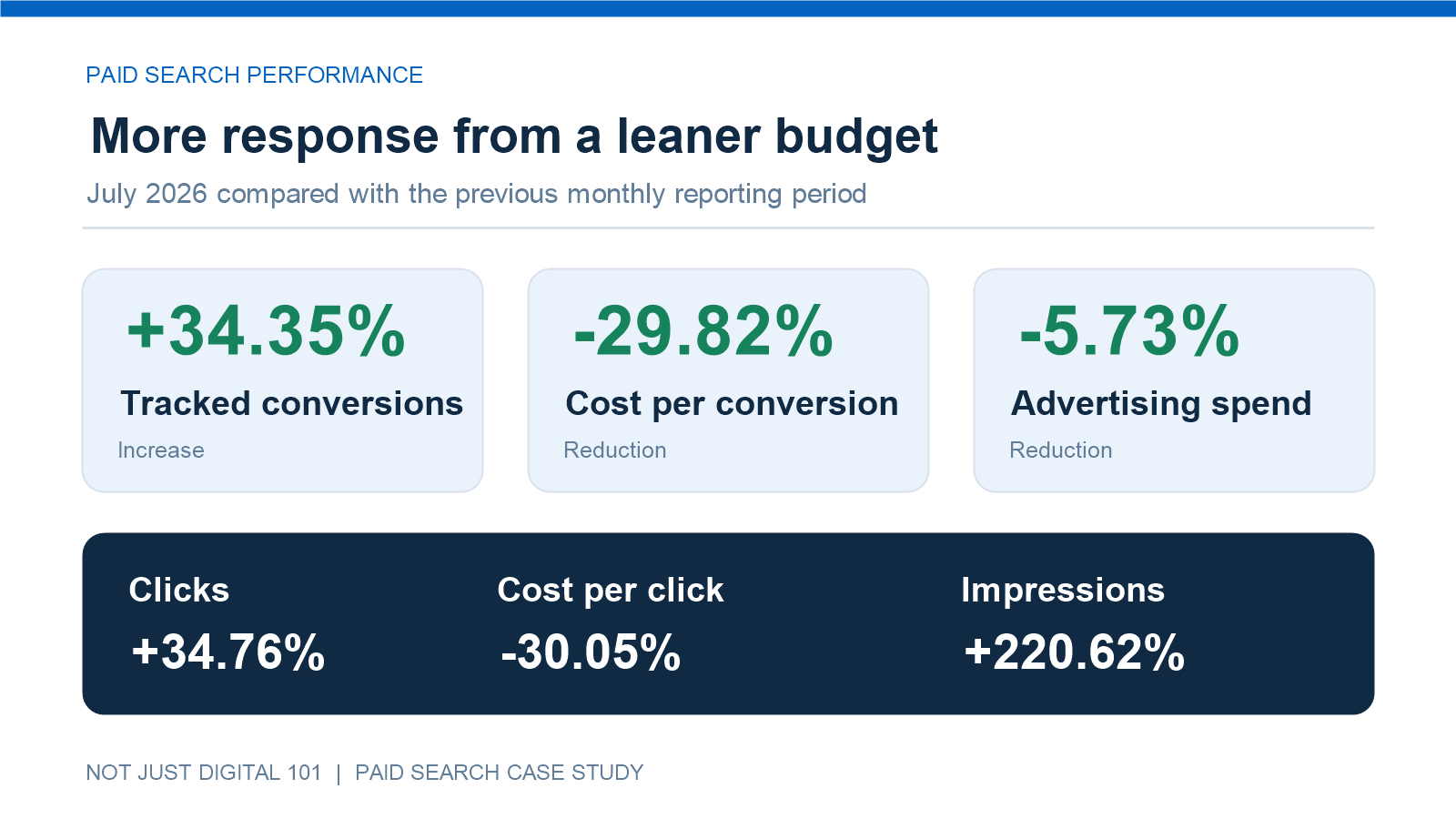
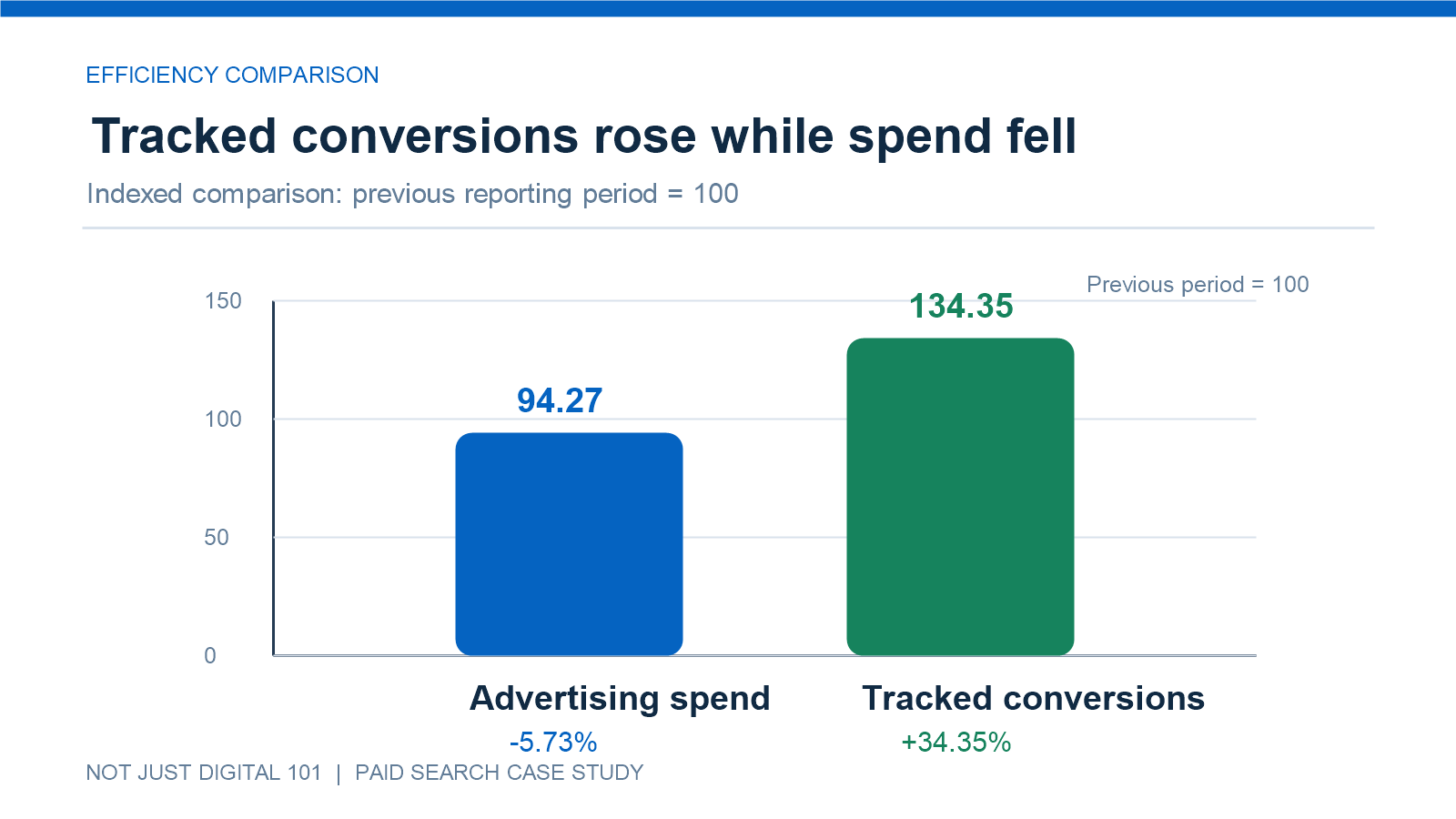
A detailed review and restructuring of a UK home improvement brand’s Google Ads activity helped increase tracked conversions by 34% in July 2026, while spend fell by 6% and the average cost per tracked conversion reduced by 30%. The work also exposed important tracking and location-page issues, creating a clearer plan for connecting PPC, SEO and website improvements.
+34%
Tracked conversions
−30%
Cost per tracked conversion
−6%
Google Ads spend
July 2026 compared with the previous reporting period. Conversion figures are tracked actions, not confirmed enquiries.
The goal
The brand wanted to generate more enquiries from its digital marketing while making better use of its Google Ads budget. The company covers a wide geographical area, so simply increasing traffic was not enough. The objective was to improve campaign efficiency, understand which searches and locations were producing value, and create a clearer connection between Google Ads, SEO and the website.
The challenge
The Google Ads account contained multiple campaigns with different budgets, targeting settings and conversion actions. Some campaigns were being restricted by their bidding settings, while there were also opportunities to reduce irrelevant traffic and improve geographical targeting.
Measurement presented an additional challenge. Google Ads was recording a mixture of actions, including form submissions, thank-you page visits and phone-related activity. This meant the headline conversion figure needed to be treated as tracked activity rather than an exact count of confirmed enquiries.
There were also limitations on the SEO side. A large group of location pages used one shared template, with only limited variation between areas and much of the body content repeated. This made it difficult to give individual locations the useful, locally relevant content they needed.
Our approach
I carried out a detailed review of the Google Ads account and completed a series of practical improvements:
- 01
Reviewed campaign budgets and Target CPA settings that were restricting delivery.
- 02
Added relevant new keywords and negative keywords to reduce wasted spend.
- 03
Corrected conflicts between negative keywords.
- 04
Adjusted ad group and location targeting.
- 05
Paused an advert that was directing visitors to the Reviews page rather than a stronger enquiry page.
- 06
Created and set up a new Performance Max campaign.
- 07
Built a live reporting dashboard to make campaign performance and conversion types easier to understand.
A substantial series of account-management tasks was completed during the July 2026 reporting period.
I also used the PPC findings to inform the wider SEO and website strategy. This included investigating the location-page setup and developing a proposed approach that would allow useful local content, FAQs, internal links and calls to action to be managed separately for priority locations.
This reflects my wider approach to Google Ads management, SEO services and digital marketing strategy: connect the channels, improve the measurement and focus on the actions most likely to support enquiries.
The results
July 2026 produced a clear improvement in the Google Ads account:
- Tracked conversions increased by 34%.
- Total Google Ads spend reduced by 6%.
- Average cost per tracked conversion fell by 30%.
- Clicks increased by 35%.
- Average cost per click reduced by 30%.
- Advertising impressions increased by 221%.
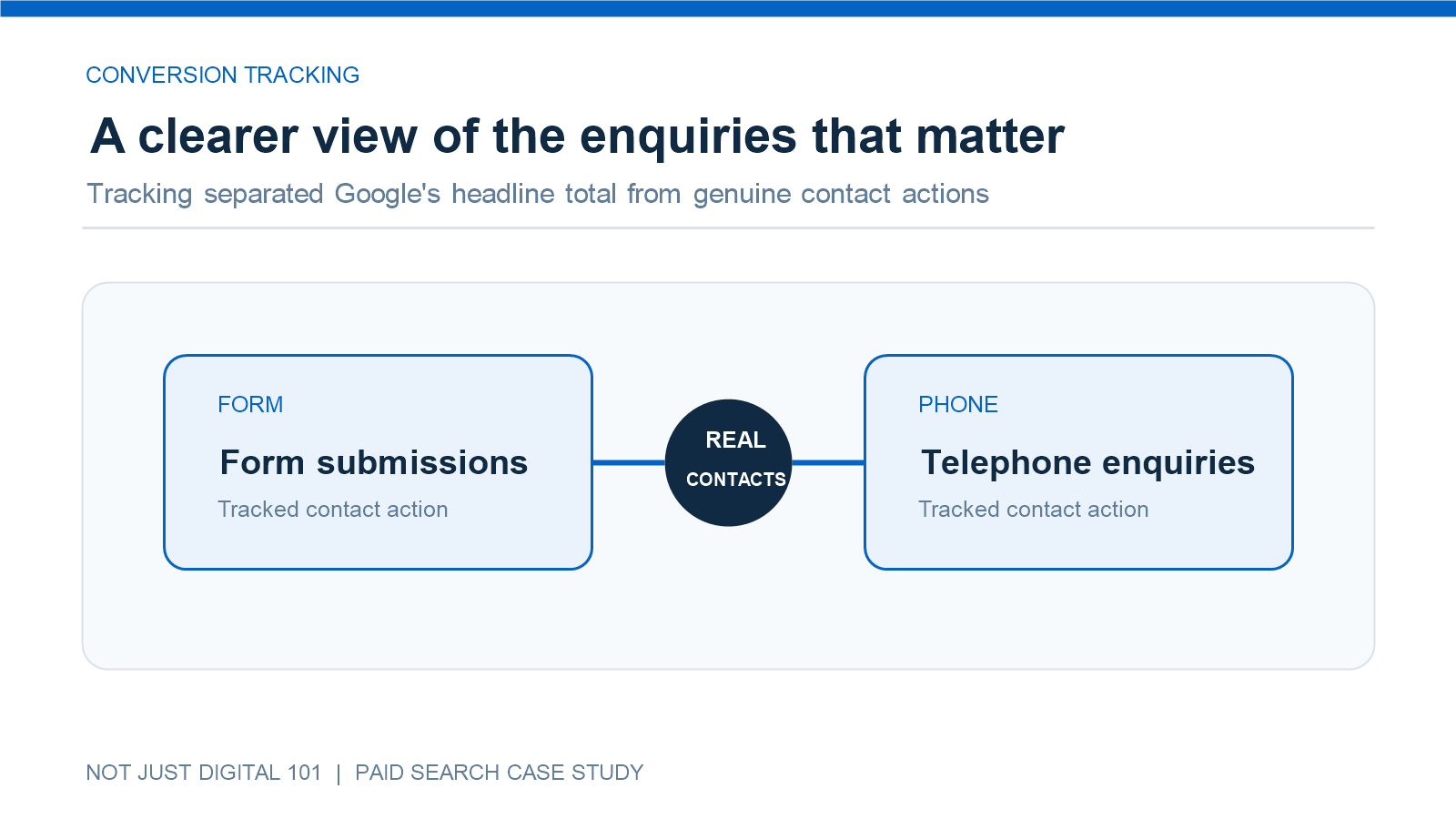
The account generated more tracked activity and website traffic at a lower average cost. The review also provided a clearer picture of the difference between Google’s headline conversion total and the genuine form and telephone enquiries that matter to the business.
The next stage
A later review showed that Search was making the stronger contribution to tracked form activity relative to the budget used, while Performance Max required closer scrutiny.
This led to a recommendation to verify the conversion tracking and consider moving some budget from Performance Max into selected Search campaigns, while keeping the overall budget unchanged.
The next stage of the SEO work is to improve priority location pages with genuinely useful local content and measure their performance through relevant organic visibility and enquiries.
By reviewing PPC, SEO, tracking and website performance together, I was able to give the business a clearer foundation for making informed marketing decisions rather than relying on clicks or headline conversion figures alone.
More case studies
Next step
Could your PPC campaigns work harder?
If your campaigns are generating activity but you are unsure which actions represent genuine enquiries, contact Not Just Digital 101 for a no-obligation review.